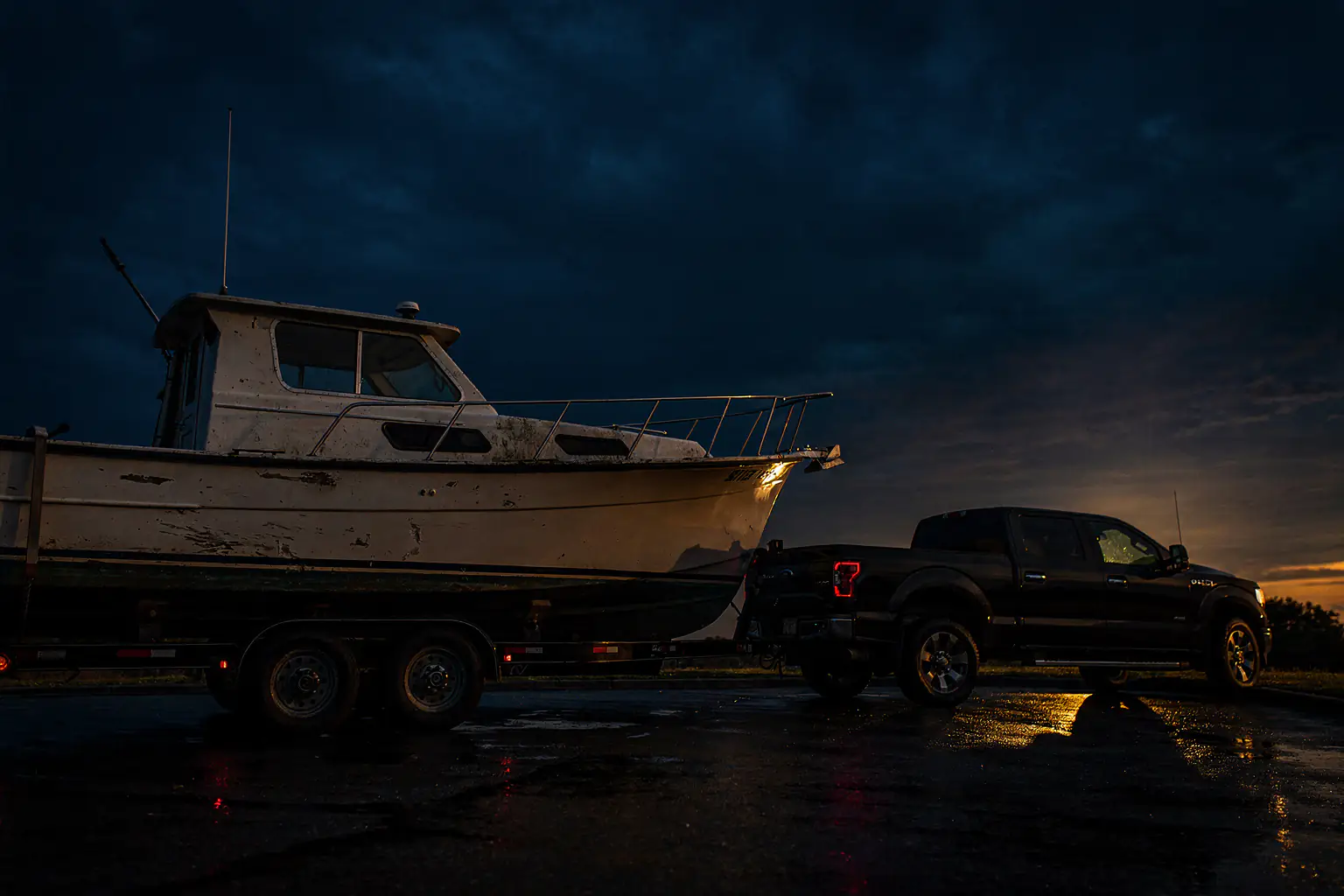
How to dispose of a fiberglass boat in Rhode Island
Statewide licensed pickup and EPA-compliant disposal for Rhode Island fiberglass hulls.
Why are fiberglass boats hard to dispose of?
Fiberglass boat disposal in Rhode Island runs $400 to $1,500 depending on hull length, foam core density, and whether the boat still has fuel, batteries, or other fluids aboard. Rhode Island's coastline, Narragansett Bay, and inland lakes like Worden Pond have kept recreational boats in heavy rotation since the 1970s and 80s boom years, and a lot of those hulls are now end of life. Rhode Island boat disposal laws restrict fiberglass landfilling because the resin and glass fibers don't break down, and fiberglass dust created during dismantling is classified as a hazardous material under state solid waste rules. The Rhode Island Resource Recovery Corporation, which oversees solid waste disposal in Rhode Island, does not accept fiberglass boat hulls at standard transfer stations.
The typical scenario Fiberglass Boat Disposal in Rhode Island sees is an inherited or long-abandoned boat hull sitting in a driveway in Warwick or a marina lot in Bristol, no longer seaworthy, too far gone to salvage or scrap for parts. Local salvage yards won't touch fiberglass. Marinas in Newport and Westerly charge monthly storage fees that add up fast. Towing a hull across state lines without the right permits creates its own problems. Fiberglass Boat Disposal in Rhode Island is licensed to drain fluids, remove batteries and electronics, and hand the hull off to a certified processor, with a disposal certificate issued once the job is complete. Text a photo of your boat to get a flat Rhode Island quote within the hour.
What does professional boat removal cost in Rhode Island?
What it costs
Fiberglass Boat Disposal in Rhode Island runs $400 to $1,500 depending on hull length, foam core density, and whether the boat hull still has fuel, batteries, or other hazardous materials on board. A 20-foot fiberglass runabout sitting in a Warwick driveway with drained fluids lands on the lower end. A 38-foot cabin cruiser abandoned at a Wickford marina with a full engine compartment, live batteries, and resin-saturated foam core is a different job entirely.
Rhode Island disposal laws
Rhode Island boat disposal laws treat fiberglass as composite waste, meaning a boat hull can't go to a standard landfill. The glass fibers, resin, and fiberglass dust require certified processing, not a dump run.
Coastal storage and local conditions
Rhode Island's coastal storage patterns leave a lot of recreational boats sitting in tight yards in Bristol, Portsmouth, and Tiverton, often no longer seaworthy, with electronics and scrap metal mixed into the layup. Rhode Island boat recycling program options are limited, so most end-of-life hulls need dismantling before a certified recycler will accept them.
What's included
Fiberglass Boat Disposal in Rhode Island handles drain fluids, salvage separation, towing, and delivers a disposal certificate accepted by marinas and HOAs. Text a photo of the boat hull to get a flat Rhode Island quote within the hour.
What are your Rhode Island disposal options for a fiberglass hull?
Yard or trailer pickup
If you've got a single fiberglass boat hull parked at a Rhode Island residence, on a trailer or blocks in the yard, this is the most straightforward path. Why fiberglass boats are hard to dispose of comes down to one thing: most landfills won't accept them. Fiberglass is a thermoset resin reinforced with glass fibers, and standard landfill sites reject it because it doesn't break down and the fiberglass dust and resin residue can create hazardous materials concerns during dismantling. Hansons Boat Removal drains all fuel, removes batteries and electronics, handles the engine, and transports the hull to a certified processor. There's no DIY disposal steps shortcut here that avoids a fee, and anyone telling you scrap your boat for free is either taking something valuable off it or cutting corners on where it ends up. Cost runs $400 to $1,500 depending on hull length, foam core density, and whether fluids are still present.
Marina or slip removal
Rhode Island marina operators dealing with an abandoned, end of life, or no longer seaworthy fiberglass hull know the problem well: the boat is taking up a slip, the owner is unreachable or deceased, and the vessel is becoming marine debris. Hansons Boat Removal coordinates directly with marina staff, handles dockside dismantling, and stops your slip fees the same day we remove the hull. We pull batteries, drain fluids, strip electronics, and deal with the engine before the fiberglass scrap goes anywhere near a salvage yard or certified recycler. Rhode Island boat disposal laws around abandoned recreational boats require documented disposal, and we provide a disposal certificate so the title can be cleared and the slip reassigned without legal exposure.
Multi-hull disposal
Rhode Island boatyards, estate executors, and salvage operators sometimes come to us with several fiberglass hulls at once, ranging from small recreational boats to larger end of life vessels that aren't seaworthy and have no salvage value left. The Rhode Island boat recycling program infrastructure is still limited, so professional boat removal at scale requires a contractor who can coordinate towing, dismantling, hazardous materials removal, and certified processing across multiple hulls without dumping anything in a landfill. Fines for improper disposal in Rhode Island are real and can follow an estate or business for years. Hansons Boat Removal prices multi-hull jobs by the hull count and condition, and the future of boat recycling in Rhode Island depends on this kind of structured, documented disposal chain rather than hulls piling up in salvage yards indefinitely.
Cities we serve
All Service Areas by County
We also serve these communities across the state
Providence County
- Burrillville
- Central Falls
- Chepachet
- Clayville
- Cranston
- Cumberland
- Cumberland Hill
- East Providence
- Foster
- Foster Center
- Glocester
- Greenville
- Harmony
- Harrisville
- Johnston
- Lincoln
- North Providence
- North Smithfield
- Pascoag
- Pawtucket
- Scituate
- Smithfield
- Valley Falls
- Woonsocket
Washington County
- Ashaway
- Bradford
- Carolina
- Charlestown
- Exeter
- Hope Valley
- Hopkinton
- Kingston
- Misquamicut
- Narragansett
- Narragansett Pier
- New Shoreham
- North Kingstown
- Quonochontaug
- Richmond
- South Kingstown
- Wakefield-Peace Dale
- Watch Hill
- Weekapaug
- Westerly
- Wyoming
Newport County
- Jamestown
- Little Compton
- Melville
- Middletown
- Newport
- Newport East
- Portsmouth
- Tiverton
Kent County
- Coventry
- East Greenwich
- Greene
- Warwick
- West Greenwich
- West Warwick
Bristol County
- Barrington
- Bristol
- Warren
Frequently Asked Questions
Can I take my fiberglass boat to a Rhode Island landfill?
Rhode Island's solid waste regulations prohibit fiberglass-reinforced plastic hulls from standard municipal landfills, including the Central Landfill in Johnston. FRP doesn't break down and contaminates fill. Legal disposal requires a certified processor who grinds and processes the material. Hansons Boat Removal handles that full chain and provides a disposal certificate confirming compliant end-of-life processing.
What does fiberglass boat disposal cost in Rhode Island?
Hansons Boat Removal prices fiberglass disposal in Rhode Island between $400 and $1,500. Hull length is the biggest driver, but foam core density and whether fuel or fluids are still aboard also affect the final number. A boat with a thick foam-filled hull costs more to grind and process than a hollow-core hull of the same length. Hansons Boat Removal quotes the exact figure before any work starts.
Do I need a Rhode Island permit to transport a fiberglass hull?
Rhode Island RIDOT requires an oversize load permit for hulls wider than 8.5 feet on state roads, which covers most fiberglass boats 22 feet and up. Hansons Boat Removal pulls those permits as part of the job. Owners don't file anything separately. If the hull is sitting at a marina in Newport or Warwick, Hansons Boat Removal coordinates the transport paperwork from that point.
What Rhode Island environmental rules apply to fiberglass hull disposal?
Rhode Island DEM classifies resin-based composites as restricted solid waste, and any fluids remaining in the hull, diesel, oil, or bilge water, must be removed before processing under state hazardous material handling rules. Hansons Boat Removal drains and disposes of all fluids before the hull goes to a certified processor, keeping the job compliant with Rhode Island DEM requirements from start to finish.
Can you handle fiberglass boats stuck in Rhode Island marinas?
Hansons Boat Removal regularly works marinas in Providence, Bristol, and Westerly where derelict fiberglass hulls have been sitting in slips or on the hard for years. Marina operators and estate executors both call for this. Hansons Boat Removal coordinates haul-out, transport, and certified disposal, then delivers a disposal certificate the marina can use to satisfy Rhode Island DEM or harbor authority documentation requirements.
How do you get free disposal pricing in Rhode Island?
Call Hansons Boat Removal or send a photo with your hull length and zip code. Written quote within hours, disposal facility named upfront, no obligation to book.