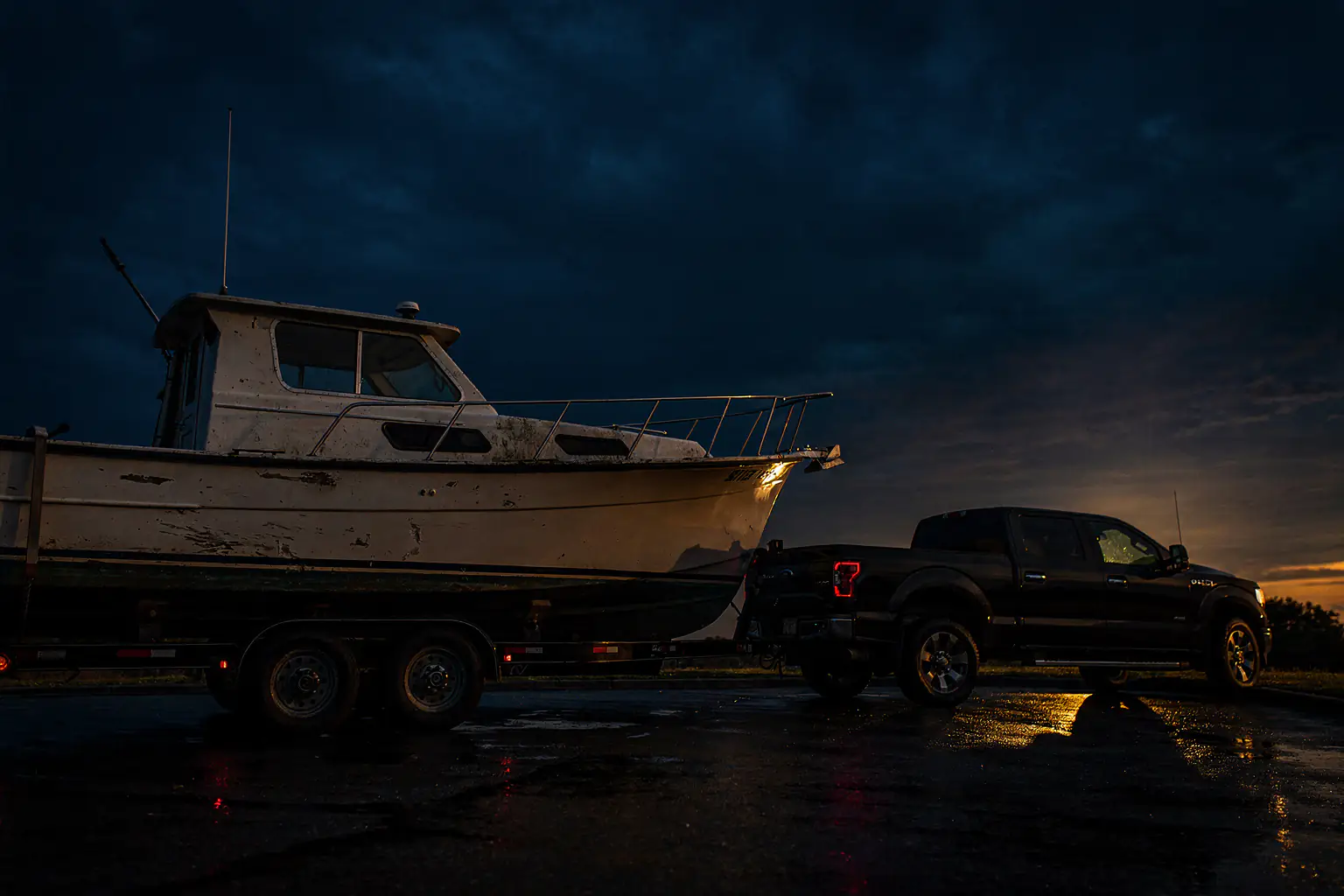
The repair quote came back higher than the boat was worth, and that is the moment a fiberglass hull in Colorado stops being a project and starts being a problem sitting in a driveway or storage lot in Aurora or Boulder. Nobody wants to pour money into gelcoat on something that will not sell for what the fix cost.
That is where fiberglass boat disposal comes in, start to finish, and here that means a longer haul since the nearest processor is not close. My crew tows the hull out whole, cuts it down at our yard, and gets the material to a processor instead of it sitting through another de-winterizing season. Missing paperwork does not stop the job.
Fiberglass boat disposal pricing in Colorado
Colorado, starting at$400+Firm quote from photos.
Hull lengthUnder 20 ft is quick. 20+ ft needs cuts and more time.
LocationDriveway on flat ground is simplest. Ramp haul-outs cost more.
ConditionSoft transoms, missing floors, hardware pulled — all changes the cut.
DistanceMiles to our yard. Longer haul, higher line item.
Local read — Colorado
In Colorado the number usually comes down to how far the hull has to travel, since most pickups happen well away from water, out of a driveway, barn, or storage lot, and the run to the processor tends to be long. Spring de-winterizing and fall storage deadlines are when we get busiest. A typical hull here is a ski or fishing boat that has not seen water in a season or two. Send photos, hull length, and your ZIP.
What we take in Colorado
Bowriders & runabouts18–22 ft fiberglass hulls, gelcoat oxidized, transom soft.
Cuddy cabins & cruisers24–30 ft glass hulls with sunken interiors or dead motors.
Center consoles & bay boatsCoastal glass hulls with cracked stringers or floor rot.
Fiberglass sailboatsTrailer-sailors and small keels ready to be cut down.
Missing paperwork or a stalled restoration doesn't hold up the pickup.
One number for pickup, transport, cutting, and disposal. No hourly, no fuel surcharges after.
3
Schedule the tow
We coordinate the pickup window. The crew calls when they're an hour out.
4
Haul to our yard, cut it down
Hull comes off in one piece when it can, then it's cut into sections at our yard. No cutting torches in your driveway.
5
Recycle what routes, dispose of the rest
Metal fittings and hardware recycled. Fiberglass goes to a processor equipped for it.
Fiberglass disposal in Colorado: FAQ
How much does it cost to get rid of an old fiberglass boat in Colorado?
Cost mostly tracks with hull size and distance to the processor, and Colorado pulls tend to run longer than coastal states since most boats sit well away from water, all within the range in the pricing section above. A ski boat out of Aurora and a larger cruiser out of Boulder will not price the same even on a similar haul.
Will a junkyard or scrap yard take a fiberglass boat?
Metal is what pays at a scrap yard, and a Colorado fiberglass hull has almost none once the trailer and motor are stripped off, which is exactly why so many sit for years in garages and storage lots. We take the entire boat, hull and all, instead of leaving you to find separate buyers for each piece.
Can fiberglass boats be recycled?
Recycling is possible but not cheap or simple. Hulls usually get ground down or sent to one of the specialized facilities built for composite material, and that process costs real money. Metal hardware, fittings, and trim are the part that recycles easily. We handle both sides and dispose of the rest the right way instead of cutting corners.
Can I cut up a fiberglass boat myself?
You can cut one up yourself, and some Colorado owners have tried it in a barn or driveway. What that usually costs you is a respirator, blades that will not last, dust everywhere, and a landfill that still will not take the pieces once you are done. We cut hulls at our yard instead, which keeps all of that off your property.
Is an old fiberglass boat worth anything?
As a boat, almost never once it has sat through a few de-winterizing seasons without use. The trailer, motor, and any working electronics are worth a separate look since they can carry real value and offset part of the job. That is worth mentioning before you assume the whole thing is worthless.
Do I need a title to dispose of a boat in Colorado?
Colorado does not title boats the way some states do, but the full picture depends on your situation, so check the legal section on our Colorado boat removal page instead of taking a shortcut answer here. What matters on our end is that missing paperwork does not stop the pickup.
Is fiberglass boat disposal ever free?
Donation programs are usually what stands between a dead Colorado hull and a landfill, and they only want boats that still run and hold value. A dried-out hull that missed a repair quote and got parked usually will not qualify. If the motor or trailer covers the trip, I will say so before we book.