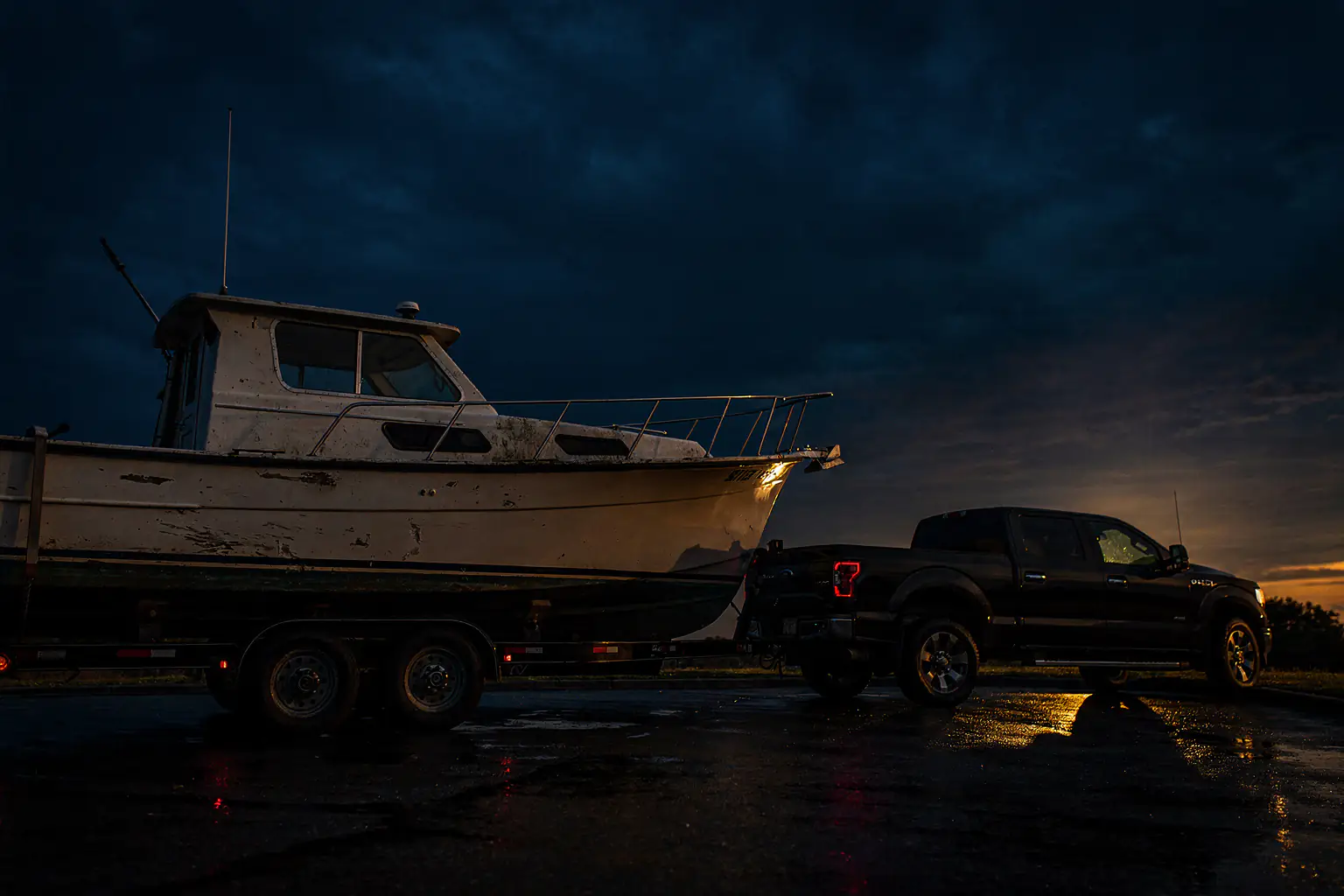
Somebody in Rutland pulled the deck liner off a project sailboat three summers back, found the plywood core gone soft under the winches, and the restoration stalled right there. The mast came down for the work and never went back up. It happens the same way near Burlington: enthusiasm for a winter project runs out long before the fiberglass work does.
That is usually when the boat lands with us. We run sailboat disposal start to finish: rig down, keel out with its scrap value credited, hull cut apart at our yard, and in-water pickups coordinated with the marina for boats still sitting at a lake place. A missing title does not hold up the job.
How much does sailboat disposal cost in Vermont?
Vermont, starting at$600+Lead keel scrap $0.40–$0.80/lb credited back.
Sailboat disposal in Vermont starts at $600. The final number depends on vessel length, keel type, and whether the boat sits in a marina slip or on the hard. The keel is the biggest variable: lead recovers roughly $0.40 to $0.80 per pound at scrap, and that credit comes off your price. An iron keel brings less. The mast and standing rigging go to metal recycling the same way.
You send photos, you get one firm number, and that number covers rig-down through disposal. Nobody has heard a different price at the curb.
LengthLonger hull, more cutting, more labor at the yard.
Keel typeLead recovers more per pound than iron. Fin, full, or wing.
In-water vs on the hardSlip pickups add crane time and marina coordination.
Rig conditionUsable sails, winches, and hardware pull credit back.
Local read — Vermont
Vermont pricing runs on the lower side of the range for most jobs, since hauls to our yard tend to be short and most sailboats we see sit in a driveway or at a lake place rather than tied up on the water. Spring de-winterizing and the fall storage deadline are our two busiest stretches. Most boats here are smaller trailer sailers or daysailers. Send photos of the boat and rig, the hull length, and where it sits.
How we dispose of a sailboat
The rig comes down first. Mast unstepped, standing rigging cut away or salvaged, spreaders and boom stacked and strapped. Then the keel: unbolted or cut out at our yard, weighed, and sold to the metal recycler, with the value credited back to you. What is left is a fiberglass hull, and that gets cut down and routed to a processor the same way we handle any hull.
If the boat is still in the water, we run the haul-out: crane time, slip coordination, the conversation with the marina office. You do not call the crane company, and you do not manage three vendors to lose one boat. Boats on stands, in cradles, or buried behind a garage on a dead trailer load the same day the rig comes down.
Honest take
What about donating the sailboat?
Donation is real, and for the right boat it is the best deal going: free pickup and a tax receipt. Here is the part the ads skip. Charities sell donated boats to fund their work, so they want boats a buyer would pay for, and the survey is where most old sailboats fall out.
If a boat sat for ten years with soft decks and a seized diesel, the charity does not want it either. Send photos anyway. If yours has donation value, I will tell you to donate it, because you will hear it from the surveyor eventually and I would rather you hear it from me first.
Getting rid of an old sailboat: what we take
Trailer sailers, day sailers, full keelboats, race boats long past racing, and the half-finished restoration where the ambition ran out before the deck core did. Mast standing or already down, sails rotted or still worth something, it all loads.
Winches, hardware, and usable sails get salvaged, and anything with resale value is spoken for before the hull is cut. A powerboat hull without a rig belongs with Vermont fiberglass boat disposal. A sailboat that still sails and just needs to move to a new owner or a new marina is a transport job: Vermont boat hauling.
Sailboats carry the same paperwork questions as any vessel, plus the occasional federally documented boat, and the answers depend on the state. What Vermont requires is covered on the legal section of our Vermont boat removal page. Missing paperwork does not stop the pickup, and you get proof of disposal when the job is done.
Sailboat jobs, rigs down
Watermarked photos are placeholders while we swap in real Vermont jobs.
22 ft trailer sailer, rig lashed since the last haul-out27 ft sloop, mast down, ready for the haulLead keel out, weighed, and credited
Sailboat disposal in Vermont: what owners ask
How much does it cost to get rid of a sailboat in Vermont?
Vermont numbers tend toward the lower part of the range above, mostly because hauls to our yard are short and most boats sit in a driveway or at a lake place rather than needing a haul-out. A bigger keelboat or a longer tow off a back road pushes the number up from there.
Can you take a sailboat straight out of a marina slip?
Yes, we handle the whole pull ourselves, the haul-out, the crane time if the yard needs one, and the conversation with whoever runs the storage lot or launch. You do not have to coordinate a lift crew or negotiate access. Tell us where the boat sits and we take it from there.
Is the lead keel worth anything?
Once a sailboat stops sailing, the keel is often its most valuable remaining part. Lead carries real scrap weight and gets credited against the price of the job. Iron keels, more common on older or smaller boats, bring in less at the yard. Either way, we work the credit into your quote up front.
Should I just donate the sailboat instead?
Decent decks and running gear usually mean donation beats scrapping, and we will tell you that instead of taking the job. Charities need boats they can resell, so a stalled project with a soft deck core usually will not pass their survey. Send photos and we will give an honest read.
What happens to the mast, rigging, and sails?
Mast and rigging go to metal recycling once the rig comes down, the aluminum and stainless both worth something at scale. Sails, winches, blocks, and any hardware still in usable shape get pulled aside and salvaged, and where something carries real value we credit it against the price instead of scrapping it outright.
Do I need a title to dispose of a sailboat in Vermont?
That question belongs on our Vermont boat removal page, where the legal section covers it properly. Here is what matters for this page: missing paperwork does not stop the pickup. We have taken boats with no documentation at all and still finished the job on the day we said we would.
What if the boat has been sitting on stands for years?
Long stand time is common on the project boats we get called about, deck cores gone soft, seized fittings, a trailer that has not rolled in years. None of it changes whether we take the job. Our quote already assumes rougher shape than the photos might show, so there are no surprises when we arrive.
Send photos of the boat and the rig, its length, and where it sits. One firm number for rig-down, haul, and disposal, with any keel value already credited, usually the same day.