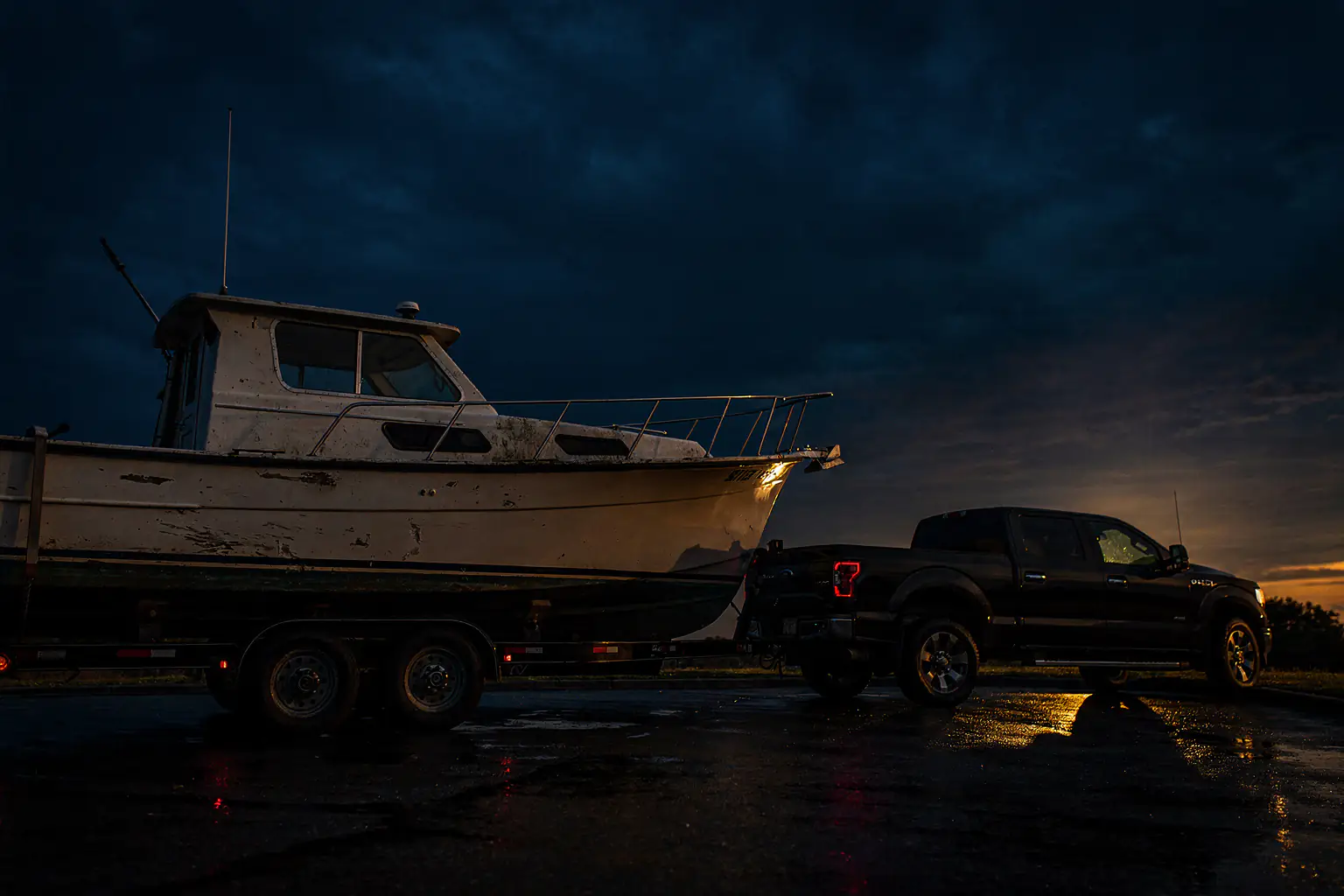
The motor quit two summers ago, and once that happened the hull turned into dead weight nobody wanted to deal with. That's what I hear driving into Martinsburg and out toward Charleston both, a fiberglass boat on a trailer with an engine that will not turn over and no reason left to fix it. West Virginia is inland, so almost everything I haul comes off a driveway, a barn, or a storage lot.
That's fiberglass boat disposal, start to finish: we tow the hull out whole, cut it down at our yard, and route the material to a processor. Missing paperwork, a lost title or plates that expired long ago, does not stop the job.
Fiberglass boat disposal pricing in West Virginia
West Virginia, starting at$400+Firm quote from photos.
Hull lengthUnder 20 ft is quick. 20+ ft needs cuts and more time.
LocationDriveway on flat ground is simplest. Ramp haul-outs cost more.
ConditionSoft transoms, missing floors, hardware pulled — all changes the cut.
DistanceMiles to our yard. Longer haul, higher line item.
Local read — West Virginia
In West Virginia, the haul to the yard usually stays short, since almost everything I pick up comes off a driveway, a barn, or a storage lot. Spring cleanout season brings the heaviest run of calls, but the schedule stays fairly even the rest of the year. Hull size here tends to run smaller, mostly older recreational boats. Send photos, the hull length, and your ZIP, and I will work up a firm number off the range above.
What we take in West Virginia
Bowriders & runabouts18–22 ft fiberglass hulls, gelcoat oxidized, transom soft.
Cuddy cabins & cruisers24–30 ft glass hulls with sunken interiors or dead motors.
Center consoles & bay boatsCoastal glass hulls with cracked stringers or floor rot.
Fiberglass sailboatsTrailer-sailors and small keels ready to be cut down.
Missing paperwork or a stalled restoration doesn't hold up the pickup.
One number for pickup, transport, cutting, and disposal. No hourly, no fuel surcharges after.
3
Schedule the tow
We coordinate the pickup window. The crew calls when they're an hour out.
4
Haul to our yard, cut it down
Hull comes off in one piece when it can, then it's cut into sections at our yard. No cutting torches in your driveway.
5
Recycle what routes, dispose of the rest
Metal fittings and hardware recycled. Fiberglass goes to a processor equipped for it.
Fiberglass disposal in West Virginia: FAQ
How much does it cost to get rid of an old fiberglass boat in West Virginia?
West Virginia hauls typically stay short since most pickups come off a driveway, a barn, or a storage lot rather than the water. Hull size is the other big factor in the number. The range in the pricing section above covers most jobs we see. Send photos, hull length, and ZIP for a firm quote.
Will a junkyard or scrap yard take a fiberglass boat?
Scrap yards buy metal, not fiberglass, and a hull just does not weigh in the way they need it to, so most turn the job down flat. They might take a trailer on its own. We handle the whole boat in one pickup instead of sending you to three different buyers.
Can fiberglass boats be recycled?
It can be recycled, though the process is limited and not cheap. Hulls generally need a facility built for grinding fiberglass specifically, which rules out most standard scrap operations. Motors, trailers, and metal hardware are the parts that recycle in the normal sense. We route what we can to a processor and dispose of the rest the right way.
Can I cut up a fiberglass boat myself?
You can, but budget for real protective gear against the dust, a blade that wears out fast, and a landfill that will likely refuse a fiberglass load without warning. Doing this in a driveway near Martinsburg or Charleston gets messy quick. We cut hulls at our own yard instead.
Is an old fiberglass boat worth anything?
Almost never once the motor has quit and the boat has sat for a season or two. What holds value is usually the trailer, or hardware and electronics that still work, sometimes the motor itself if it can be salvaged for parts. The hull alone rarely carries any resale value.
Do I need a title to dispose of a boat in West Virginia?
Whether West Virginia requires one depends on the boat, and the details are in the legal section on our West Virginia boat removal page. For the pickup, it comes down to this: missing paperwork does not stop the job. We have hauled hulls with no title plenty of times.
Is fiberglass boat disposal ever free?
Sometimes, when the trailer or hardware still has enough value to cover the trip, and we will tell you that up front before booking anything. A hull with a dead motor and nothing else salvageable usually does not qualify, since the cutting and processing still cost us real money. We are straight about which case applies to you.