
Water recovery · Flagler County
Sunken Boat Recovery in Flagler County, Florida
Sunken boat removal in Florida covers the raise, the tow, and disposal or salvage, with one firm number from photos and depth before any crew mobilizes.
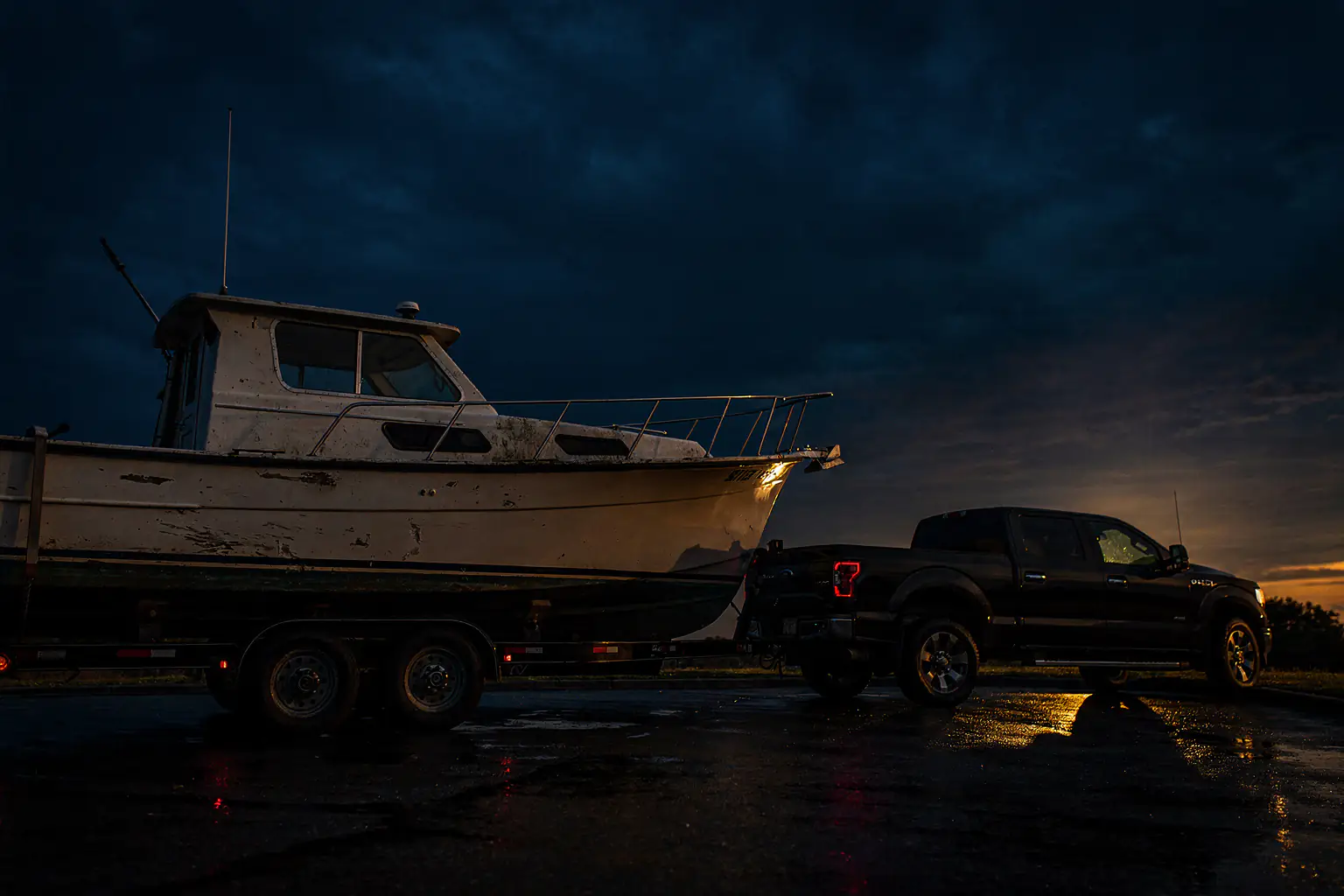
Palm Coast canals and seawalls are where Flagler boats usually go down, often after an Atlantic blow strains a lift or a mooring line. The first word usually comes from a neighbor or the dock owner.
The crew stages from the nearest ramp, and photos and depth are my first look. One number comes before equipment moves, then tow or salvage. City-by-city work is in the recovery jobs log, and the full process is on the Florida sunken boat recovery page.
How sunken boat recovery works
Every raise follows the same order. Divers survey the hull first: where it sits, what the bottom is, whether fuel or oil is still aboard. Then they attach the lift bags to cleats or rigging points, and the bags bring the vessel toward the surface in stages. Once the gunwales clear, salvage pumps begin pumping the water out faster than it can return, and the boat floats on its own lines again. From there a towboat walks it to the nearest usable boat ramp or haul-out, and the trailer takes over.
Vessels 30ft plus in length, deep water, or hulls with structural damage need more: additional divers, float bag deployment under the hull, sometimes a crane at the seawall. That is specialized equipment we bring, not a problem you solve. Fuel, oil, and batteries come off the moment the boat is accessible, which keeps a recovery from turning into a cleanup and keeps you on the right side of environmental regulations.
What does sunken boat removal cost in Florida?
There is no honest flat price for a raise, and anyone quoting one before seeing photos is guessing. The cost of boat recovery moves with four things: how deep the boat sits, how big it is, how hard the spot is to reach, and whether fuel is still aboard. A 19-foot runabout settled next to its own dock is the simple end. A 34-foot yacht on the bottom of a channel is the other end, and the average recovery cost between those two points spans a wide range.
What we fix is the process: photos and depth first, one firm number second, crews third. The number covers the raise, the tow, and the disposal decision, and it does not change at the water. If the boat went down with the trailer nearby and can be pulled at the ramp, we say so, because the simple version should cost the simple price.
After the raise: salvage, recycle, or repair
A raised boat goes one of three ways. If the vessel still has value, we tow it to a repair yard and your insurance conversation continues; a salvaged boat with a sound hull is worth saving. If it does not, the hull goes to our yard for dismantling and recycling: motors, metals, and hardware come off for salvage, recyclable materials such as metal go to the recycler, and the fiberglass goes to a disposal facility, not a fence line. Boat junkyards take the parts worth keeping; the rest is handled as responsible disposal under the same rules we run on dry land.
The honest version most owners need to hear: a boat that spent a week underwater is usually a disposal job, not a repair job. We tell you which one yours is from the first photos, before you spend money raising a hull that is headed to the recycler either way.
Recovery calls across Flagler County
Palm Coast · Flagler Beach · Bunnell · Beverly Beach · Marineland
Get a sunken boat out of the water
Send photos, the depth if you know it, and where the boat sits: slip, mooring, ramp, or seawall. One firm number for the raise, the tow, and what comes after, before any crew mobilizes. Fuel in the water? Call now, crews answer 24/7.